Acing the SLS AIAT Interview: How to Prepare
Share this article:
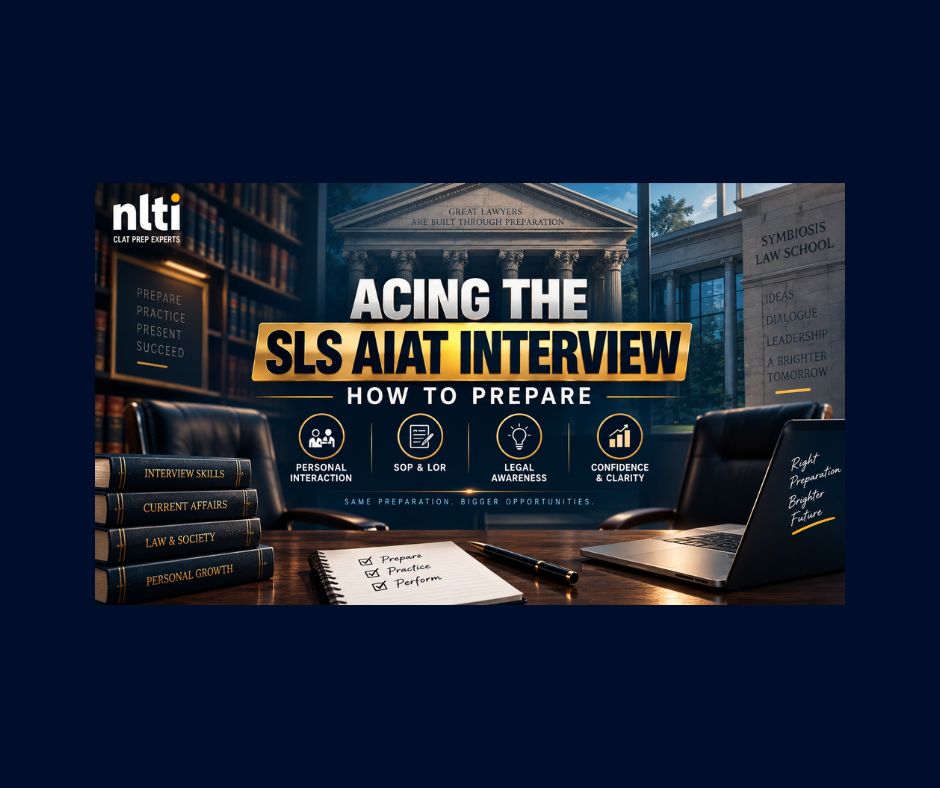
Clearing the SLS AIAT written test is only half the battle. The Personal Interaction (PI) round that follows carries 30 marks a significant chunk of your final admission score and yet most candidates spend weeks prepping for the written paper and barely a day preparing for the interview.
This guide walks you through exactly what the SLS AIAT interview evaluates, how to prepare for it methodically, and the mistakes that cost candidates marks they didn't need to lose.
SLS AIAT 2027: Dates, Registration & Admission Guide
What Is the SLS AIAT Personal Interaction (PI)?
The PI is the second stage of admission to the Symbiosis Law School, Pune Three-Year LL.B. programme, conducted after the written AIAT. It's a short, structured interview - not a stress test, but a genuine evaluation of who you are as a candidate.
What the PI Actually Evaluates
Unlike a generic aptitude interview, the SLS AIAT PI is explicitly designed to assess specific qualities in a candidate. Knowing these categories in advance lets you prepare with intent rather than guessing.
Personal attributes and fitment - how well you understand yourself and why this particular programme and career path suit you.
Work experience - relevant if you're a graduate from a non-law background (arts, commerce, engineering, management) applying to the three-year LL.B.
Global outlook - awareness of how legal, social, and political issues connect beyond just the Indian context.
Professionalism and ethics - how you carry yourself, communicate, and respond to questions about values and integrity.
Statement of Purpose - the panel will likely ask you to expand on or defend points you've made in your SOP.
This is a strong hint about where to focus your preparation: not just current affairs, but self-awareness and the ability to articulate why you want to study law.
Best Law Colleges in India 2026: Top Universities
How to Prepare: A Step-by-Step Approach
Re-read your own SOP and LOR before the interview. Panels frequently ask candidates to elaborate on specific claims made in their Statement of Purpose, so know it well enough to speak on it naturally.
Prepare a clear, honest answer to "why law" and "why SLS Pune." This is close to a guaranteed question, and a vague or rehearsed-sounding answer stands out immediately.
Review your academic and work background. If you're coming from a non-law degree, be ready to explain how your prior education connects to your interest in law.
Stay updated on current legal and social issues. Since the written test already covers general knowledge and legal reasoning, the PI tends to probe deeper expect follow-up questions rather than fact-recall.
Practice speaking concisely. With only 6 to 8 minutes per candidate, rambling answers eat into time meant for stronger questions later in the interview.
Do a mock interview with a mentor, teacher, or peer. Practising out loud, not just thinking through answers mentally, makes a measurable difference in delivery.
Test your tech setup in advance, since the PI is conducted online - check your internet connection, camera, microphone, and backup device the day before.
Common Question Areas in the SLS AIAT Interview
Based on what the PI is designed to assess, candidates can generally expect questions to fall into a few broad categories. Treat these as areas to prepare for, not a fixed question bank.
Statement of Purpose and Letter of Recommendation: Get These Right
Your SOP and LOR aren't just paperwork they're actively used to shape the interview itself.
For your SOP:
Keep it within the 250-word limit; going over or padding it with generic statements weakens its impact.
Be specific about why you want to study law and why the three-year programme fits your background.
Avoid clichés like "I want to fight for justice" without backing it up with a real reason or experience.
For your LOR:
It should come from your Head of Institution, Supervisor, or Professor, and speak to your conduct, character, and traits.
Request it well before the deadline, since document upload windows are short and non-negotiable.
Make sure the person writing it actually knows you well enough to speak specifically, not just generically.
National Law Universities in India: Complete Guide
Common Mistakes Candidates Make in the PI
Giving a rehearsed, generic answer to "why law" that could apply to any candidate.
Not being able to explain or defend something written in their own SOP.
Rambling instead of answering concisely within the short time window.
Failing to stay updated on recent legal or current affairs topics, assuming the PI won't touch on them.
Treating the interview casually because it feels less "testable" than the written exam it carries 30 marks, the same weight as a serious chunk of the written paper.
Technical issues during the online interview due to not testing the setup beforehand.
Quick Prep Checklist Before Interview Day
Re-read your SOP and LOR thoroughly.
Prepare a genuine, specific answer for "why law" and "why SLS Pune."
Review 2–3 recent legal or current affairs topics you can speak on confidently.
Do at least one mock interview out loud.
Test your internet, camera, and microphone the day before.
Keep your original documents, SOP, and LOR ready and accessible during the interview.
Dress and set up your background appropriately for a professional online interview.
Top 14 Law Entrance Exams in India After 12th (2027)
Conclusion
The SLS AIAT interview isn't designed to catch candidates out it's designed to see whether you genuinely understand your own motivations, can think on your feet, and communicate with clarity in a short window.
Preparing well means knowing your own SOP inside out, having a real answer to why you want to study law, and practising concise, confident responses rather than memorised lines.
Treat the PI with the same seriousness as the written AIAT, and it stops being the unpredictable part of your application.
If you're preparing for law entrance exams, explore structured guidance and mock interview support at NLTI.
Frequently Asked Questions
1. How many marks does the SLS AIAT interview carry?
The Personal Interaction (PI) round carries 30 marks out of the total AIAT evaluation, making it a significant part of your final score alongside the written test.
2. How long is the SLS AIAT Personal Interaction?
Each candidate typically gets 6 to 8 minutes for the PI round, so answers need to be clear and reasonably concise rather than long-winded.
3. Is the SLS AIAT interview conducted online or in person?
The Personal Interaction for the three-year LL.B. programme is conducted online, so candidates should test their internet connection, camera, and microphone in advance.
4. What should I write in my SOP for the SLS AIAT admission process?
Your Statement of Purpose should stay within the 250-word limit and clearly explain your specific reasons for pursuing law and choosing SLS Pune, rather than relying on generic statements.
5. Can the interview panel ask about my Statement of Purpose?
Yes, panels frequently ask candidates to elaborate on or defend specific points made in their SOP, so it's important to know your own SOP well before the interview.
6. Do non-law graduates get different questions in the AIAT interview?
Not entirely different, but candidates from non-law academic backgrounds should be ready to explain how their prior degree and work experience connect to their interest in studying law.
7. What kind of Letter of Recommendation is required for SLS AIAT admission?
The LOR should come from the Head of your Institution, a Supervisor, or a Professor, and should speak to your conduct, character, and relevant traits as a candidate.
8. Should I prepare current affairs specifically for the interview?
Yes, staying updated on recent legal, social, and political developments helps, since the PI evaluates global outlook and awareness beyond just what's tested in the written exam.
9. What is the biggest mistake candidates make in the SLS AIAT interview?
Giving vague, rehearsed answers to "why law" or "why SLS Pune" without any specific, personal reasoning is one of the most common and avoidable mistakes.
10. How should I prepare if I only have a few days before the PI?
Focus on re-reading your SOP, preparing a genuine answer to your motivation for studying law, reviewing a few current affairs topics, and doing at least one mock interview out loud.
Get In Touch
Have questions? We'd love to hear from you. Send us a message and we'll respond as soon as possible.